Alberta LPN Jobs in 2026: Where the Work Actually Is
The Alberta LPN job market in 2026 is strong and lopsided at the same time. Employers cannot find enough practical nurses, the provincial outlook is Good in every region, and yet fewer than half of working LPNs hold a full-time line. Here is where the 21,817 active LPNs actually work, what a new graduate should expect, and where the fastest route to a full-time job runs.

The workforce in one table
| Measure | Figure | Source |
|---|---|---|
| Active LPNs in Alberta | 21,817 | CLHA, August 2026 |
| Full-time / part-time / casual | 43% / 40% / 17% | CLHA, August 2026 |
| Hospital / long-term care / community / home care / other | 40% / 25% / 18% / 7% / 11% | CLHA, August 2026 |
| Permits issued in one month | 144 (66 new graduates) | CLHA, August 2026 |
| Employment outlook, 2025–2027 | Good, all eight regions | Job Bank |
| Employers who recruited LPNs in two years / had difficulty | 81% / 44% | alis |
| AHS hourly range | $33.16 – $43.42 | AHS careers, 2026 |
Two of those numbers do not fit together comfortably: nearly half of employers struggle to hire, and fewer than half of LPNs are full-time. Both are true. Employers post part-time and casual lines because they are cheaper to carry and easier to flex; LPNs stack them. The result is a market where a new graduate can find work within weeks and a full-time line within a year or two, and the difference between those two timelines is mostly where you are willing to work.
Where the work is, by setting
Hospitals: 40%
The largest share and the most competitive for full-time lines. AHS acute-care postings for new graduates are overwhelmingly casual or temporary part-time at first; the full-time line comes from internal postings once you are in. The AUPE agreement's premiums make hospital shifts more valuable than the base rate suggests: evenings, nights, weekends, and a responsibility premium that went from $1.25 to $3.50 an hour for taking charge.
Long-term care: 25%
The fastest route to a full-time line, and the setting where an LPN's scope is used most fully: medication administration, assessment, wound care, and often a charge role over HCAs. Public sites are on the AHS grid; private and non-profit operators are on their own agreements, which historically trail the AHS settlement. Ask which grid a posting is on before comparing offers.
Community health and home care: 25% combined
Public health, clinics, home care. More autonomy, more driving (the agreement raised mileage to $0.72 a kilometre), and a scope decision on every visit because the environment factor changes with every front door. Home care in particular values LPNs who can work without an RN down the hall.

Where the work is, by geography
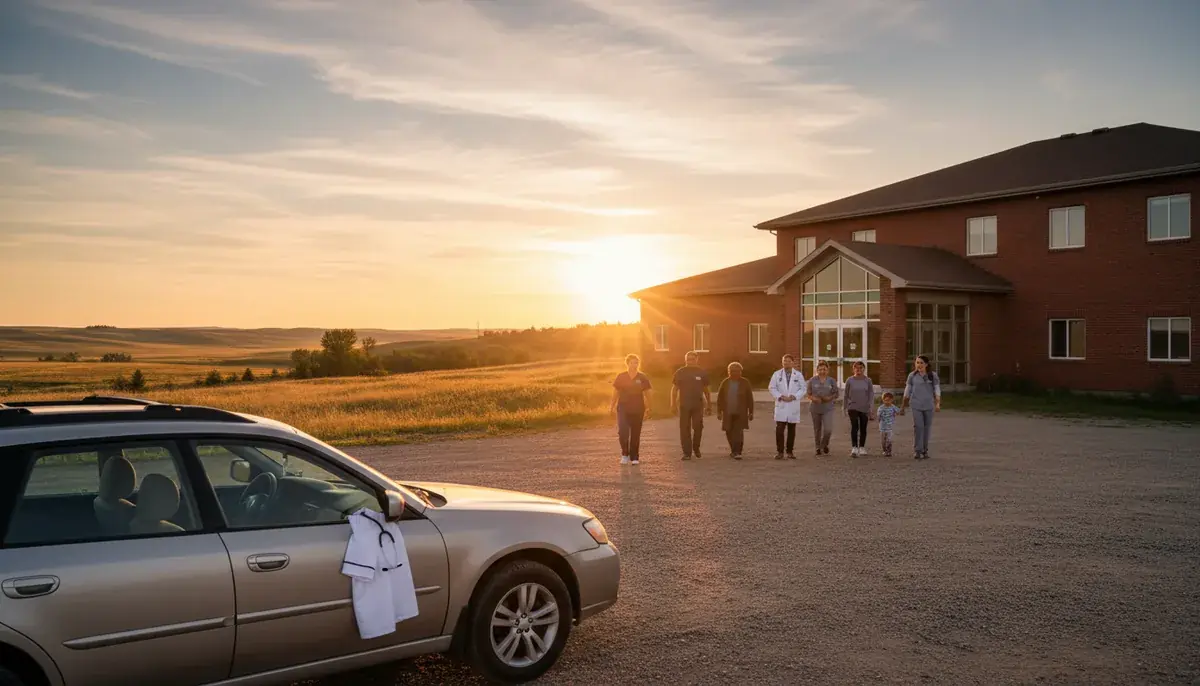
Job Bank's outlook is Good in all eight economic regions: Athabasca–Grande Prairie–Peace River, Banff–Jasper–Rocky Mountain House, Calgary, Camrose–Drumheller, Edmonton, Lethbridge–Medicine Hat, Red Deer, and Wood Buffalo–Cold Lake. What differs is how fast a full-time line appears. Calgary and Edmonton produce most of the graduates and absorb them slowly; the other six regions produce fewer and hire faster. The AUPE agreement adds $42.1 million over four years to the Rural Capacity Investment Fund, reaching $12.6 million a year from April 2025, for recruitment and retention where hiring is hardest. In practice that means signing incentives, relocation support and retention bonuses attached to specific rural postings. Ask.
What a new graduate should expect, honestly
- Work before the exam. The provisional permit lets you practise under supervision from the day you pay the CLHA invoice. Employers hire provisional LPNs; the permit lasts up to 365 days.
- Casual first, in the cities. Casual and temporary lines are how AHS acute sites onboard graduates. The internal posting for a permanent line comes later and favours people already on the unit.
- Full-time first, outside them. Long-term care and rural sites post permanent lines to external candidates because they have to.
- Stack with intent. Many LPNs hold a part-time line plus casual elsewhere. It works, but two employers means two sets of policies and two scope-of-practice contexts.
- Read the grid, not the headline. "$43.42" is the top step at AHS after years of hours. A new graduate starts at $33.16 and climbs with hours worked.
The number that decides your start date
None of the above applies to a graduate without a permit. The CLHA issued 144 permits in August 2026; 66 of them went to new graduates who had passed the CPNRE in an earlier window. The gap between graduation and an active permit is four to five months for a typical June graduate, and the single largest variable in it is passing the exam on the first attempt. The market is waiting on the other side of that window.
Be permit-in-hand when the hiring round runs
Lumina's readiness score tells you when you are ready to book the CPNRE, and its 160-question simulations are built to the Blueprint ranges so the first attempt is the last one. Written to Alberta scope, with a rationale on every question. Free to start.
Start free CPNRE prep →Alberta LPN news, pay and regulation updates, and CPNRE study tips. No spam, unsubscribe anytime. Privacy.
Frequently asked questions
How many LPNs work in Alberta?
The CLHA reports 21,817 active LPNs as of August 2026, plus 1,071 dual LPN and HCA registrants.
Is there a demand for LPNs in Alberta?
Yes. Job Bank rates the outlook Good for 2025 to 2027 in all eight Alberta regions, and alis reports that 44% of employers who recruited LPNs had difficulty filling positions.
Where do most Alberta LPNs work?
40% in hospitals, 25% in long-term care, 18% in community health, 7% with home-care agencies and 11% in other settings such as government, education and mental health, per the CLHA's August 2026 statistics.
Are most Alberta LPN jobs full-time?
No. 43% of Alberta LPNs work full-time, 40% part-time and 17% casual. New graduates in the big cities usually start casual or temporary; long-term care and rural sites post more permanent lines.
What does a new LPN earn in Alberta?
AHS advertises $33.16 to $43.42 an hour in 2026 under the AUPE Nursing Care agreement. New graduates start at the bottom of the grid and move up with hours worked, plus shift and responsibility premiums.
Can I get an LPN job before I pass the CPNRE?
Yes. A provisional permit from the CLHA allows supervised practice as an LPN for up to 365 days while you prepare for and await the exam. Employers hire provisional LPNs.
Sources
- CLHA, Alberta LPN Statistics, August 2026: registrants, employment status, settings, permits issued.
- Government of Canada Job Bank, Licensed practical nurse: employment outlook, Alberta, 2025–2027.
- alis (Government of Alberta), Licensed practical nurses: wages and salaries in Alberta: recruitment and hiring-difficulty figures.
- Alberta Health Services, Licensed Practical Nurse careers page: 2026 hourly range.
- AUPE, AHS Nursing Care bargaining update: premiums, mileage, Rural Capacity Investment Fund.
Figures are as published by the sources above on the date of writing; check the current CLHA fee schedule and policies before acting. Lumina AI is not affiliated with the CLHA, AUPE or AHS.
Related: Alberta LPN salary 2026: the 23.81% raise · How long CLHA registration takes · How to become an LPN in Alberta.